
Revolutionizing E-Commerce Logistics: Navigating the Future of One-Day Drone Deliveries with Amazon FBA
10/11/20232 min read
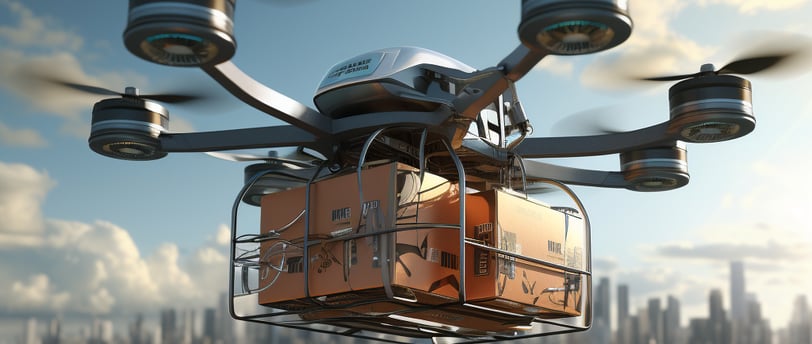
The Future is Here: Exploring One-Day Deliveries via Amazon FBA Drones
Introduction
The e-commerce realm is perpetually evolving, and Amazon has consistently been at the forefront, pushing the boundaries of what is possible. Among its innovative pursuits, one that stands out pertinently is drone delivery, a concept that combines the prowess of Amazon FBA with cutting-edge technology. This integration not only revolutionizes delivery processes but also propels the one-day delivery concept into a tangible reality.
A Glimpse into Amazon’s Drone Technology
Amazon Prime Air, a future delivery system designed to safely get packages into customers’ hands in 30 minutes or less using unmanned aerial vehicles (drones), has been in development for several years. However, regulatory hurdles and logistical challenges have delayed its large-scale implementation.
This initiative aims to enhance the efficiency of the last-mile delivery process, which is often the most time-consuming and expensive part of the entire e-commerce supply chain. The drones, designed with advanced algorithms and safety mechanisms, are intended to deliver packages under 5 pounds to customers within a 10-mile radius of an Amazon fulfillment center.
Navigating through Logistics: The FBA and Drone Symbiosis
Amazon FBA (Fulfillment by Amazon) facilitates the storage, packing, and shipping of sellers' products, inherently reducing the hassle faced by businesses. Integrating drone technology into this framework could redefine promptness in e-commerce deliveries, with the following potential impacts:
Enhanced Customer Satisfaction: As immediacy becomes a valuable currency, one-day deliveries via drones could markedly enhance customer experience and satisfaction.
Reduced Environmental Impact: Drones, especially if powered by sustainable energy sources, could reduce the carbon footprint associated with traditional delivery vehicles.
Challenges and Considerations
Despite the groundbreaking potential, the practical implementation of drone deliveries intertwines with various challenges:
Regulatory Compliance: Navigating through aviation laws and ensuring safe, unintrusive deliveries require cohesive policies and regulatory compliance.
Technological and Logistical Hurdles: Ensuring that drones can navigate through varied geographical and climatic conditions requires rigorous testing and technological refinement.
Security and Privacy Concerns: Ensuring the security of the products being delivered and mitigating privacy concerns related to drone operations are pivotal.
A Peep into the Future
While Amazon has successfully conducted a handful of drone deliveries, the widespread application of this technology on a global scale remains in the future's horizon. This futuristic venture indicates a promising trajectory toward reducing delivery times and potentially reshaping the e-commerce landscape, setting a new benchmark for competitors and adjacent industries.
Conclusion
The conceptualization and eventual realization of Amazon Prime Air illustrate an unyielding pursuit of innovation, opening avenues for enhanced customer experiences and potentially setting a new standard in e-commerce logistics. While the amalgamation of Amazon FBA and drone technology is yet to become an everyday reality, its prospects, challenges, and implications offer a riveting glimpse into the future of e-commerce.
Further Exploration
Join us in unraveling more technological advances, innovative strategies, and insightful narratives within the e-commerce world, as we charter through the continuously evolving digital marketplace.
Sources:
Amazon.com. (2022). Amazon Prime Air.
Langley, Jr., C.J., et al. (2021). 2021 Third-Party Logistics Study: The State of Logistics Outsourcing. Infosys, Penn State, Penske, Korn Ferry.
Mearian, L. (2019). Inside Amazon's Prime Air drone delivery operation. Computerworld.
November Engineering BV


Copyright © 2023 November